How To Choose The Right Crane Rental
How the Right Crane Rental Keeps Your Lift Safe and On Schedule
Choosing the right crane is one of the most important decisions on any job site. Pick a machine that's too small and you risk delays, safety issues, and costly do-overs; pick one that's oversized and you pay for capacity you'll never use. Whether you're managing a construction project, a plant expansion, or a one-time heavy lift, the right crane rental keeps your work safe, efficient, and on schedule.
At Trueline Crane & Rigging, we help contractors and project owners make that call every day. Here's a practical guide to selecting the right crane — and the right rigging and logistics support to go with it.
1. Start with the Load
Every smart crane rigging plan begins with the load itself. Before anything else, get clear on:
- Weight — the total weight of what you're lifting, including any attachments or fixtures.
- Dimensions — length, width, and height, which affect how the load is rigged and balanced.
- Center of gravity — critical for stability, especially on irregular or top-heavy loads.
Underestimating load weight is one of the most common — and most dangerous — mistakes on a job site. When in doubt, confirm the numbers before you book equipment.
2. Evaluate the Site Conditions
The best crane for a job depends as much on where you're lifting as on what you're lifting. Consider:
- Access and space — tight urban lots and confined interiors call for compact, maneuverable cranes, while open industrial sites can accommodate larger machines.
- Ground conditions — soft, sloped, or uneven ground affects stability and may require matting or additional planning.
- Overhead obstructions — power lines, structures, and tree cover all influence boom selection and lift radius.
- Lift radius and height — how far out and how high you need to reach determines the crane's required capacity at that distance.
3. Match the Crane to the Job
Different cranes are built for different work. A few common options in a crane rental fleet include:
- Rough-terrain and all-terrain cranes — versatile choices for uneven or mixed-access sites.
- Hydraulic truck cranes — quick to set up and ideal for shorter-duration lifts.
- Crawler cranes — high-capacity machines suited to heavy, long-duration projects.
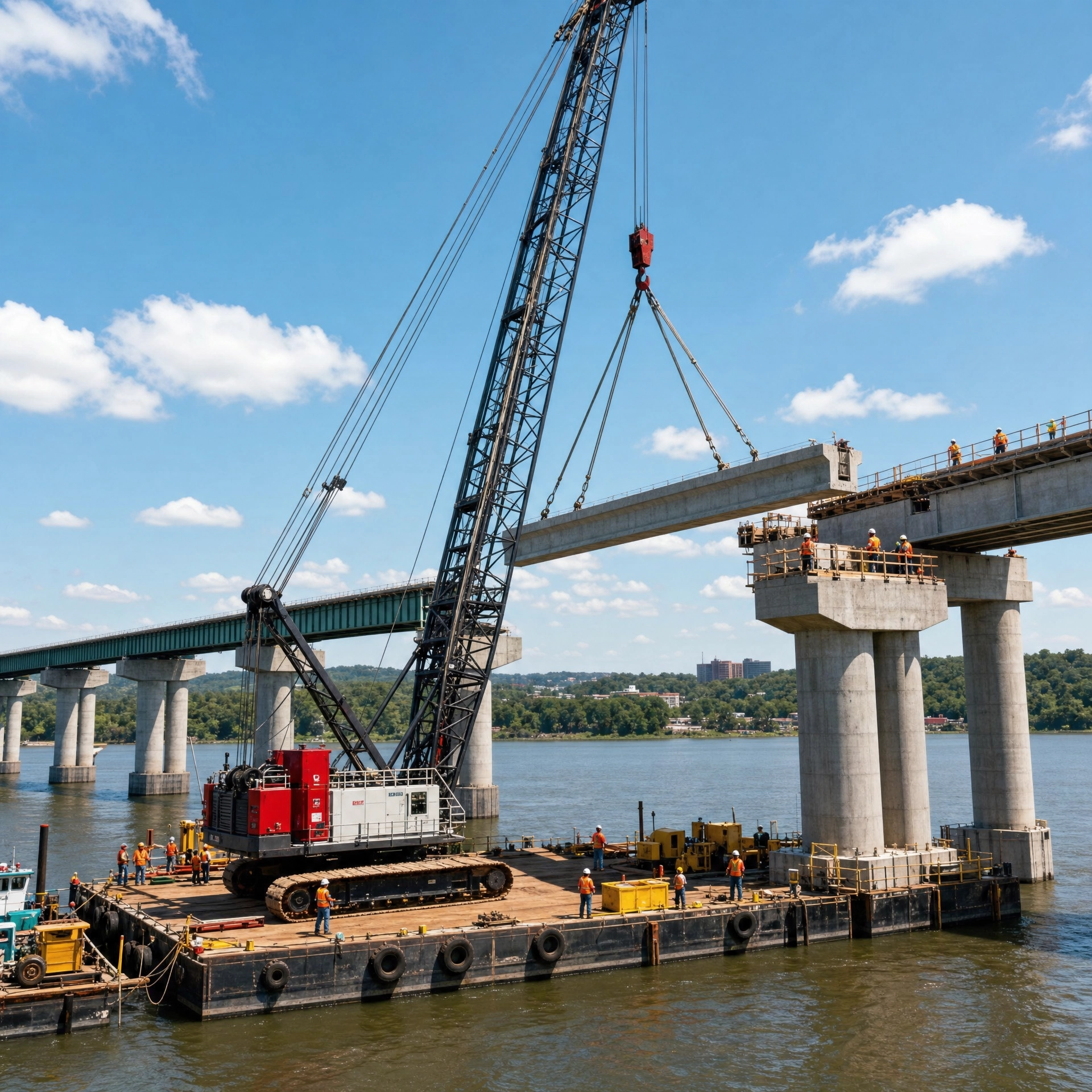
When your project calls for serious capacity, heavy lift cranes handle oversized and high-tonnage loads such as structural steel, vessels, transformers, and modular components — with the engineering support and counterweight planning those lifts demand.
4. Don't Overlook the Rigging
A crane is only as safe as the rigging that supports it. Professional crane rigging ensures the load is secured, balanced, and lifted within safe tolerances. Certified riggers develop a detailed lift plan, select the proper slings and hardware, and coordinate signaling throughout the operation. For complex or critical lifts, this planning isn't optional — it's the difference between a smooth job and a serious incident.
5. Plan How the Equipment Gets There — and Where It Goes
Lifting is only part of the picture. Getting heavy machinery to and around your site is a job in itself:
- Machinery moving covers in-plant repositioning, equipment setting, and full facility relocations with minimal downtime.
- Over-the-road heavy haul transports oversized and dimensional loads across long distances, with permitting, route surveys, and escorts handled for you.
- On-site heavy haul moves and sets heavy loads within your facility, navigating confined spaces and tight tolerances.
- Barge services open up waterside access for equipment and materials where roads alone can't reach.
Coordinating these services with your crane rental under one provider saves time, reduces handling risk, and keeps your project moving from start to finish.
6. Work with Certified, Experienced Professionals
Even the perfect crane can't make up for inexperience. Look for a provider with OSHA-compliant, factory-certified operators, well-maintained equipment, and a strong safety record. Experienced crews don't just execute the lift — they help you plan it, flag potential issues early, and adapt when conditions change on site.
The Bottom Line
Choosing the right crane comes down to understanding your load, your site, and your timeline — then matching them with the right equipment, rigging, and logistics support. When all three line up, your lift is safer, faster, and more cost-effective.
Not sure which crane your project needs? That's exactly what we're here for.
Trueline Crane & Rigging offers full-service crane rental, rigging, heavy lift cranes, machinery moving, heavy haul, and barge services — backed by certified professionals and available 24/7.
Ready to plan your next lift? Call (866) 507-9607 or request a free quote today.
You might also like
The blog that does the "heavy lifting" of explaining the work; ties straight to your service